
You’ve likely heard about the H‑1B visa lottery, but when you look closer, it doesn’t feel much like a lottery—it feels more like a gamble with limited seats at the table. Record-high demand has made this already tough system even harder to navigate, especially for skilled workers who bring years of experience and training but still find themselves sidelined by chance. As someone looking to build a career in the U.S., you need a strategy that doesn’t just bank on the lottery. This article walks you through what’s happening with the H‑1B program right now, how the odds stack up, and which other visa pathways can still open doors when the lottery doesn’t.
The Numbers Behind the Chaos
H‑1B lottery registration numbers have shifted fast. Just last year, over 759,000 entries were recorded, and this year it dropped to around 470,000. You’d think that kind of drop would help your chances, but not necessarily. While the total entries declined, the number of unique applicants remained nearly the same—around 442,000. That means fewer duplicate submissions, but still high competition. USCIS only allows 85,000 new H‑1B visas per year (65,000 for regular cap, 20,000 for advanced degree exemptions), and only about 114,000 were selected in 2025. If you’re doing the math, that puts your odds at just under 1 in 4. It’s better than nothing, but far from guaranteed.
And if you’re one of the many who didn’t make the cut, it’s not just disappointing—it’s disruptive. You may have lined up a job, signed a lease, or planned your next academic step, only to find everything on pause. With such unpredictability, it’s smart to plan backup visa options early—before your F‑1 or OPT clock runs out.
The Illusion of a Second Chance
You might’ve heard rumors of second lotteries being run. Yes, USCIS occasionally opens a second round if there aren’t enough filings from the first. That happened last year. But here’s the problem: there’s no official rule saying they must do this. If enough people accept their offers and file, there’s no second draw. So waiting around in hopes of a second chance might just waste valuable time when you could be exploring alternatives.
That’s why more international graduates and professionals are looking toward cap-exempt roles. If you’re hired by a nonprofit research institution, a university, or a qualifying affiliated organization, you don’t need to worry about the H‑1B cap. These positions can file at any time of year—and they’re not restricted by quotas. It’s not a fit for everyone, but if you qualify, it’s one of the cleanest ways to work in the U.S. without riding the lottery rollercoaster.
Alternatives That Keep You Moving
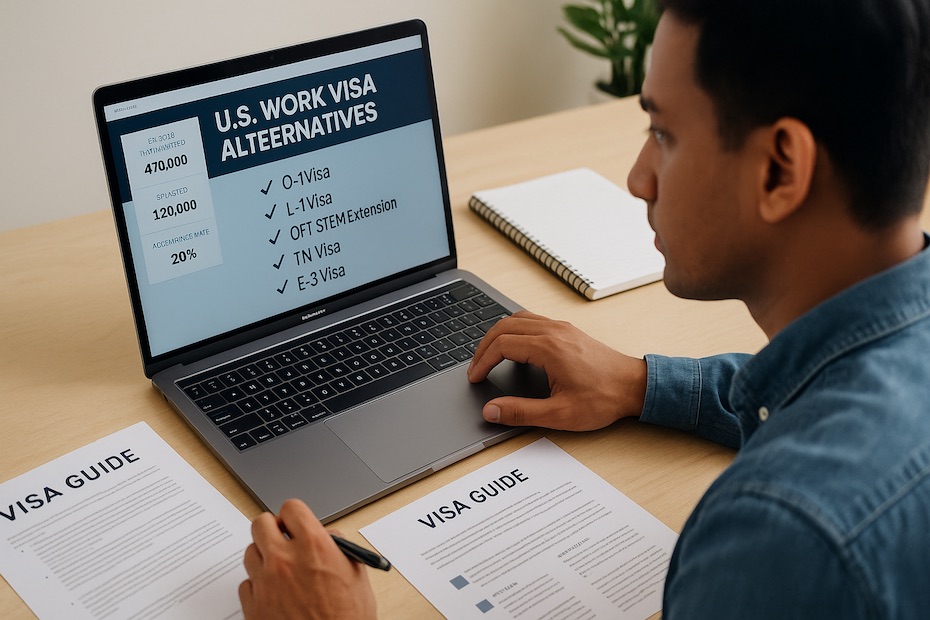
If you’re aiming for tech, science, or business roles, several visas can help you sidestep the H‑1B entirely. The O‑1 visa is a powerful option if you have significant achievements in your field—published work, awards, leadership roles, or patents. It’s not for beginners, but if you’ve built a strong resume, it’s worth considering.
Another practical path is the L‑1 visa. If you’re working for a global company that has a U.S. office, you could transfer internally after a year abroad. The process is straightforward, and there’s no lottery involved. Or maybe you’re from Australia, Canada, or Singapore. If so, check out E‑3 (Australia), TN (Canada/Mexico), or H‑1B1 (Singapore/Chile). These treaty-based visas often get overlooked, but they’re easier to obtain and come with fewer restrictions.
If you’re aiming for short-term projects, the J‑1 visa might be your best bet. It supports internships, fellowships, and research placements. Just be aware that some J‑1 categories require you to return to your home country afterward—so read the terms carefully.
OPT and STEM OPT Extensions
If you’re on an F‑1 student visa, you probably know about Optional Practical Training (OPT). But are you maximizing it? OPT lets you work for 12 months post-graduation, and if you’re in a STEM field, you can apply for a 24-month extension. That gives you up to three years of work authorization—enough time to gain experience, build employer trust, and try again for the H‑1B if needed.
This extension is especially useful if you’re targeting jobs in computer science, engineering, or data analytics. Many students use this time to secure promotions or pursue cap-exempt jobs. It’s also a good runway if you’re planning to transition into green card options.
EB‑2 and EB‑3 Green Cards
Let’s say your employer sees long-term potential in you. In that case, the EB‑2 or EB‑3 green card pathways can offer a more stable solution. These employment-based immigration categories are tied to your skills and job offers. EB‑2 is for advanced degree holders or workers with exceptional ability, while EB‑3 fits skilled workers and professionals with a bachelor’s degree.
Unlike H‑1B, these don’t rely on a lottery, though they do involve longer processing times. If you’re from India or China, expect backlogs. Still, if your goal is long-term residency, this path puts you on solid ground. And with growing demand for skilled workers in the U.S., more companies are willing to support these filings.
Rising Frustration and Policy Shifts
It’s no secret that the H‑1B system has critics. Some argue it favors outsourcing firms. Others say it depresses wages. And lately, voices like Elon Musk have stirred public debate about reforming the process to favor higher-paid, uniquely skilled candidates. You might feel caught in the middle—qualified, eager, and stuck in a system that doesn’t always reward merit.
Policy discussions are moving toward salary-based selection or even scrapping the lottery altogether. But don’t wait on Congress. Immigration reform takes time, and your visa deadlines won’t pause for debate. Your focus should be on what you can control now—knowing your options and applying strategically.
Navigating the System Without Panic
The best way to win in this system is to stop treating it like a single-track race. You’ve got more control than you think. Get your paperwork ready early. Build relationships with employers that understand immigration timelines. If you’re still studying, use that time to plan your OPT and post-grad steps. And always have a plan B—and C.
Keep in mind that visa rules can shift based on global events, national policies, or even economic trends. That’s why it’s essential to keep up with USCIS announcements, employer requirements, and reputable immigration news sources. The more informed you are, the fewer surprises you’ll face.
What to Know Beyond H‑1B
- H‑1B lottery acceptance rate sits around 24–26%.
- Cap-exempt H‑1Bs (universities, nonprofits) can file any time.
- O‑1 visas support top-tier professionals without a lottery.
- E‑3, TN, and H‑1B1 work for certain nationalities.
- STEM OPT gives you up to 3 years of work post-degree.
- EB‑2/EB‑3 paths lead to green cards through employer sponsorship.
In Conclusion
The H‑1B visa might still be the most talked-about route, but it shouldn’t be your only one. With shifting odds, changing policies, and limited slots, it’s smarter to think like a strategist, not a gambler. You have more pathways than you realize—OPT, O‑1, L‑1, EB‑2, even treaty-based visas. The key is acting early, staying informed, and being flexible with your plan. Whether or not you land the H‑1B this year, your career doesn’t have to wait. You can move forward—just on your terms.
If you’re navigating visa complexities while managing education costs, explore the Jinhee Wilde Attorney Scholarship. This resource supports students and professionals pursuing legal careers or immigration-related studies—helping ease the financial burden of building a future in the U.S.