

In the tapestry of the United States, each state weaves its unique pattern of support for immigrants, contributing to the nation’s rich multicultural fabric. State-level support plays a pivotal role in determining how well immigrants can integrate into American society, access essential services, and ultimately, thrive in their new homeland. The importance of such support cannot be overstated, as it touches upon critical aspects of an immigrant’s life, including legal assistance, educational opportunities, healthcare access, and much more. States that prioritize these factors not only aid in the smooth transition of immigrants but also enrich their communities by fostering diversity and inclusion.
The Role of State Policies in Immigrant Support
State policies serve as the framework within which immigrants navigate their new lives in the U.S. These policies can significantly impact the well-being of immigrants, influencing everything from their legal status to their ability to access public services. The distinction between state and federal immigration policies is crucial, as states have the autonomy to implement measures that can either complement or enhance federal guidelines. For instance, while federal policies outline the broader legalities of immigration, state policies can offer additional protections, resources, and support systems tailored to the needs of their immigrant populations. This dual-layered approach to immigration policy underscores the importance of understanding and leveraging state-level support for a more comprehensive integration experience.
How to Identify Immigrant-Friendly States
Assessing Legal Assistance and Protection
Legal support is a cornerstone of immigrant integration, offering guidance through the labyrinth of immigration laws and procedures. States that prioritize legal assistance for immigrants often have policies in place that protect their rights, provide access to legal resources, and even offer state-funded representation in immigration proceedings. Immigrants looking for supportive states should seek out those with established legal aid organizations, immigrant advocacy centers, and policies designed to safeguard the rights of non-citizens.
Educational Opportunities and ESL Programs
Education plays a critical role in the integration process, offering immigrants the tools needed to navigate their new environment and opportunities for socioeconomic advancement. States with robust educational support for immigrants often feature extensive English as a Second Language (ESL) programs, both within public schools and through community initiatives. These programs not only aid in language acquisition but also help immigrants understand American culture, values, and civic responsibilities. Identifying states that invest in educational opportunities for immigrants and their families can significantly impact the speed and quality of integration.
Access to Healthcare and Social Services
Healthcare accessibility is a pressing concern for many immigrants, making states with inclusive healthcare policies particularly attractive. Some states extend healthcare services to undocumented immigrants or offer programs that provide basic medical services regardless of immigration status. Additionally, social services such as housing assistance, food aid, and employment support are critical components of state support systems for immigrants. States known for their comprehensive social services help alleviate the economic and emotional pressures of settling in a new country, making them ideal destinations for immigrants seeking a supportive environment.
Top States That Support Immigrants
Across the United States, several states stand out for their commitment to creating a supportive environment for immigrants. These states have implemented policies and programs that significantly contribute to the well-being and integration of immigrant populations. From legal assistance to educational opportunities and healthcare access, these states demonstrate a comprehensive approach to supporting their immigrant residents.
California
California is renowned for its robust legal protections for immigrants, including state-funded legal assistance for those facing deportation. The California Dream Act allows undocumented students to apply for state financial aid for college, highlighting the state’s commitment to educational opportunities for all residents. Additionally, California’s public health insurance program, Medi-Cal, has been expanded to cover all low-income residents under 26, regardless of immigration status, ensuring access to healthcare for a broader segment of the immigrant population.
New York
New York State offers a wide array of services designed to support immigrants, from the Office for New Americans, which provides legal assistance, to the Liberty Defense Project, offering free legal aid for immigrants and refugees. The state’s commitment to education is evident in its Excelsior Scholarship, which provides tuition-free college education at state universities for residents, including immigrants. New York City, in particular, stands as a sanctuary city, offering additional local protections and support services.
Illinois
Illinois has established itself as a leader in immigrant support through policies like the Illinois TRUST Act, which limits local law enforcement’s cooperation with federal immigration authorities. The state offers a range of educational programs aimed at immigrant families, including those that provide access to higher education without regard to immigration status. Illinois also extends healthcare services to all children regardless of status, under the All Kids program.
Washington
Washington State is known for its welcoming stance towards immigrants and refugees. The state provides legal aid for immigrants through the Washington Immigrant Network and the Office of Immigrant and Refugee Affairs. It has also been proactive in offering financial assistance to undocumented workers affected by the COVID-19 pandemic, recognizing the gaps in federal aid for this group. Educational support includes in-state tuition rates for undocumented students, and the state has expanded healthcare coverage to include low-income residents under certain programs, regardless of immigration status.
New Jersey
New Jersey has taken significant steps to support its immigrant population, including offering financial aid for college to undocumented students. The state has a robust legal assistance network for immigrants and has recently expanded access to driver’s licenses to all residents, regardless of immigration status. This measure not only aids in day-to-day mobility but also enhances access to employment opportunities.
Navigating Sanctuary: State Support for Immigrants
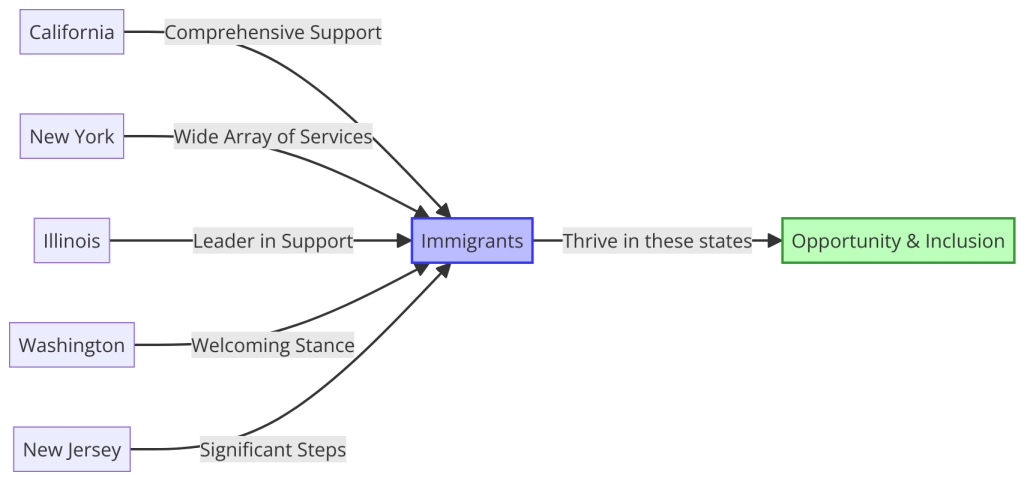
In the vast landscape of American immigration policy, the role of individual states in providing sanctuary and support to immigrants has never been more critical. The “States of Sanctuary” diagram offers a visual exploration of the states that stand at the forefront of this effort, highlighting their comprehensive approaches to facilitating immigrant integration and success. California, New York, Illinois, Washington, and New Jersey emerge as exemplars of support, each contributing to a tapestry of legal aid, educational opportunities, and healthcare services that affirm their commitment to diversity and inclusion.
These states serve as pillars of hope and progress, creating environments where immigrants can navigate the complexities of their new lives with dignity and support. By offering state-funded legal assistance, access to higher education, and healthcare programs inclusive of all residents, these states underscore the importance of state-level initiatives in complementing federal immigration policies. The diagram encapsulates this network of support, offering a clear and organized view of where immigrants can find the most comprehensive resources and protections.
As we delve deeper into the intricacies of immigration in America, the significance of state support becomes increasingly apparent. The “States of Sanctuary” diagram not only maps out the geography of immigrant support but also symbolizes the broader American values of compassion, opportunity, and inclusion. It serves as a reminder that amidst the challenges of immigration, there are states that remain steadfast in their commitment to welcoming and supporting those who seek a new beginning on their shores.
Navigating Challenges
Despite the commendable efforts of these states to support immigrants, significant challenges remain. Immigrants across the country continue to face obstacles that hinder their full integration and participation in society. These challenges range from language barriers and cultural adjustment to discrimination and uncertainty about legal status.
One of the primary issues is the inconsistency in support and policies across states, which creates a patchwork of protections that can vary dramatically from one state to another. This inconsistency can complicate the lives of immigrants as they navigate different legal and social services landscapes, depending on their location.
To enhance state support systems for immigrants, a more unified approach across states could be beneficial. Strategies could include:
- Establishing Clear Pathways to Legal Status: States can advocate for and implement policies that provide clear, accessible pathways for immigrants to obtain legal status, thereby reducing uncertainty and enhancing stability for immigrant families.
- Expanding Access to Language and Integration Programs: Beyond ESL classes, states can invest in comprehensive integration programs that include cultural orientation, rights and responsibilities education, and community engagement initiatives.
- Strengthening Anti-Discrimination and Inclusion Policies: Ensuring that anti-discrimination laws are strictly enforced and promoting inclusion in all sectors of society can help immigrants feel safer and more welcome.
- Facilitating Access to Healthcare and Social Services: States can work to eliminate barriers to essential services, ensuring that all immigrants, regardless of status, have access to healthcare, housing assistance, and food aid.
The journey toward creating a fully supportive environment for immigrants is ongoing. By acknowledging the challenges and actively working to address them, states can play a crucial role in ensuring that immigrants not only survive but thrive in their new homeland. This effort requires collaboration between government entities, non-profit organizations, communities, and the immigrants themselves, building a more inclusive society where everyone has the opportunity to contribute and prosper.
FAQs on State Support for Immigrants
Navigating the landscape of state support for immigrants can be complex, with various resources and policies in place to assist. Understanding how to access these resources is crucial for immigrants seeking to establish a stable and successful life in the U.S. Here are some commonly asked questions and their answers to guide immigrants in accessing state support.
How can immigrants access state-provided legal assistance?
Immigrants can access state-provided legal assistance through several channels. Many states have offices or agencies dedicated to immigrant affairs that offer legal aid or can direct individuals to free or low-cost legal services. Additionally, non-profit organizations and community groups often collaborate with state agencies to provide legal representation and advice. Immigrants are encouraged to reach out to local immigrant advocacy groups or search state government websites for information on legal assistance programs.
What should immigrants look for in state education programs?
When exploring state education programs, immigrants should look for those that offer comprehensive support beyond just language learning. This includes programs that provide assistance with enrollment, guidance on meeting educational requirements, and support for children in adapting to a new educational system. Additionally, many states offer scholarship programs or financial aid for immigrants and undocumented students, which can be crucial for accessing higher education.
How do healthcare policies differ for immigrants across states?
Healthcare policies for immigrants can vary significantly from state to state. Some states offer health insurance programs that cover all residents, including undocumented immigrants, while others may restrict access based on immigration status. It’s important for immigrants to research the specific healthcare policies of their state, including eligibility for Medicaid, children’s health insurance programs, and state-funded health services. Local community health centers often provide healthcare services to immigrants regardless of status and can be a valuable resource.
Where can immigrants find information about social services available to them in different states?
Information about social services for immigrants can typically be found through state government websites, particularly those related to health and human services, education, and labor. Immigrant advocacy organizations and community service providers are also key sources of information and support, offering guidance on accessing housing assistance, food aid, and other social services. Libraries and community centers often host informational sessions or provide materials on services available to immigrants.
In conclusion
Throughout this article, we’ve explored the vital role state support plays in the lives of immigrants, highlighting states that lead by example in creating welcoming and inclusive environments. From legal assistance and educational opportunities to healthcare access and social services, these states demonstrate a commitment to ensuring immigrants have the resources they need to succeed. The challenges immigrants face are significant, but with the right support, they can overcome these obstacles and make substantial contributions to the fabric of American society. Encouraging and expanding state support for immigrants is not just a matter of policy but a reflection of our values as a nation, underscoring the importance of inclusion, diversity, and opportunity for all who seek to call the United States their home.